Homeschool: How to get started (and keep going)
So you’ve decided to homeschool. Perhaps the decision has been slowly growing in your heart. Or maybe it was thrust upon you by circumstance. However you arrived here, it can feel big.
At first, the responsibility you’ve taken on can feel overwhelming – especially if homeschooling wasn’t what you originally imagined for yourself or your family. You might find yourself carrying a whole mix of emotions all at once: excitement, hope, and optimism… alongside fear, worry, and doubt.
That’s ok. Fear, worry, and doubt don’t have to mean you’re making the wrong decision. Many meaningful life decisions carry some uncertainty with them. Just like other significant moments in your life, this step too may feel a little scary at first.
You are not alone in feeling this way. We have all felt the mix of excitement and nervousness when we first started homeschooling. It’s a huge step, and it’s completely natural to feel both hopeful and uncertain at the same time.
Before we get into the beauty of homeschooling, let’s knock the practicalities out of the way first.
Registering with your state or territory
As a homeschooler, you are legally required to register with your state or territory. Each state and territory also has its own legislation you’ll need to follow in terms of planning, record keeping and annual reporting.
You can find helpful summaries and guidance for each state and territory here. You can also call or email us, and we’ll be more than happy to help you get registered. We also provide registration documentation. Our is another excellent place to ask questions.
Now that the registration paperwork is underway, let’s dive in!
What about curriculum?
Some families feel strongly about ensuring the curriculum they choose aligns with the Australian Curriculum. Others prefer a more flexible approach. At Simply Homeschool, our Core Programs are aligned with the Australian Curriculum while still offering you flexibility to adapt the program to your child’s individual needs and interests. You can read more about our Core Program library here.
Homeschooling from the start: 4-7 year olds
“Play is often talked about as if it were a relief from serious learning. But for children play is serious learning. Play is really the work of childhood.”
― Fred Rogers
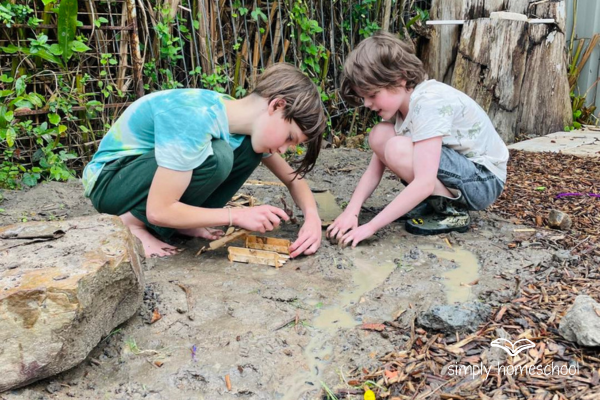
Play.
Play is crucial for young children. Through play, children experiment, negotiate, imagine, build, fail, try again, and make sense of their world. It holds inherent value. Play builds motor skills, language, creativity, problem-solving, and resilience. It is the work of children!
When homeschooling young children, it’s important to ensure their day includes time for long stretches of play.
But what about maths and reading? Start slowly and gently. Watch your child and wait until they show an interest in learning to read and count. They will. Children are innately curious.
It is ok to wait until they are ready. The priority in these early years is not to have a child who can read at five. The priority is preserving natural curiosity. A child who learns to read at seven isn’t two years “behind” a child who learns to read at five. But a child who has had time to play, imagine, and explore will carry something far more valuable: a love of learning and a curiosity that continues to grow.
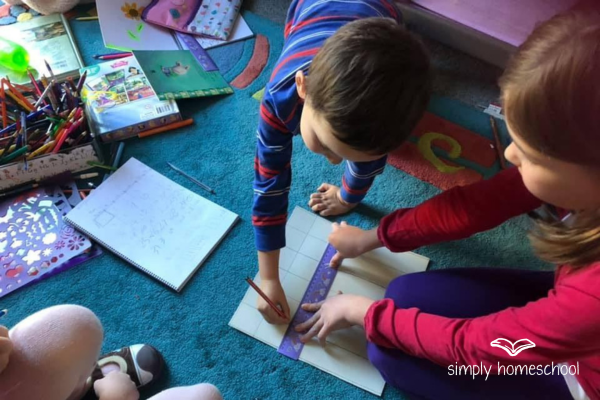
If you’re finding that your child is not understanding what you are trying to teach, set it aside. You have time to return to it later. You aren’t disadvantaging your child by waiting.
Oftentimes, something that feels slow and difficult for your child to grasp now won’t take nearly as long when they’re older and ready.
So, join them in their curiosity. Wonder out loud. Look things up together. Let learning feel a part of life.
Curiosity leads to learning. Nurture curiosity.
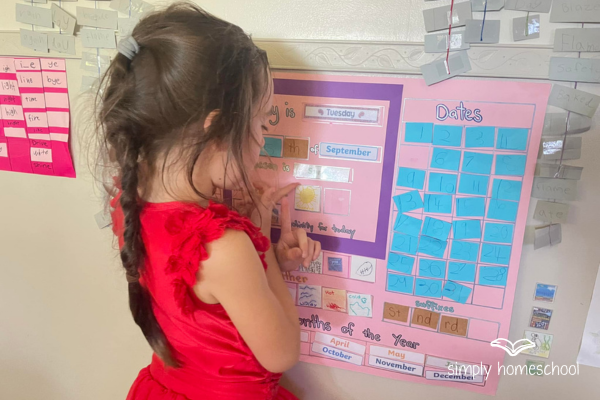
What your day could look like
There is no one right rhythm, but here is a gentle example:
- Make breakfast together
- Clean up while listening to music (explore a genre, a composer, or just something joyful)
- Once everyone is ready, sit together with a reading basket
- Read aloud a page or two from both fiction and non-fiction books
- Talk about characters and interesting ideas
- Try not to quiz – just talk
- Unstructured play time
- Make morning tea together
- Work on an activity from a Core Program together. Keep it light and low stress.
- Have lunch with a read-aloud followed by a board game or puzzle
- Afternoon outing – park, bush walk, errands, library, etc.
Keep your days flexible and light. Allow plenty of time for play and follow your children’s rhythm where you can.
We have a range of Core Programs for our youngest learners, including: Big Family Scrapbook, I Love Dirt, Illustrated Nursery Rhymes, The Little Yellow Digger, and The Waterhole.
Homeschooling 8–12 year olds
If your child is coming out of school, the first step may not be academics. It may be rebuilding: rebuilding your connection with your child and supporting them as they regain their confidence and rediscover their sense of self.
Take time to reconnect. Do fun things just for the fun of it. Laugh. Go on bush walks. Have lounge room dance parties. Read aloud on the couch. Cook together. Shoot hoops. Focus your attention on rebuilding your connection with your child.
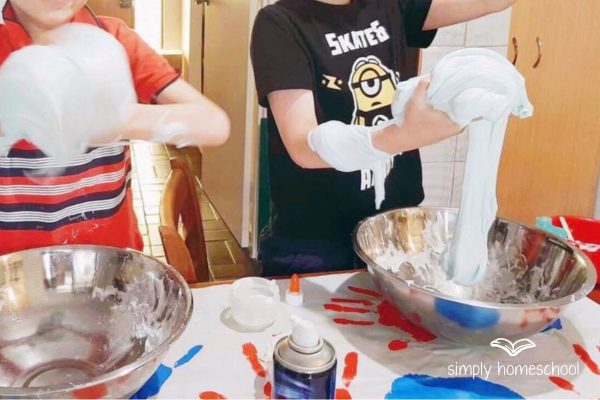
After those early days of reconnecting, you might start to feel ready to step into some academic learning, only to find that your enthusiasm is met with a refusal to learn. This isn’t laziness. It can be protection. If your child experienced trauma at school, their nervous systems may still need time to settle. Give them space to be quiet and still. Space to breathe and relax.
Nurture their spirit. Help them trust that it’s safe to want to learn again, to be interested in things, to be themselves. Try to keep from panicking and spiralling into “what ifs” and “what am I doing wrong?” Take the pressure off yourself and your child instead. Model enjoying learning something. Let them see you be curious.
Lastly, help them rediscover play – exploring, discovering, and wondering. At this age, they are still young enough to get all the enormous benefits from play.
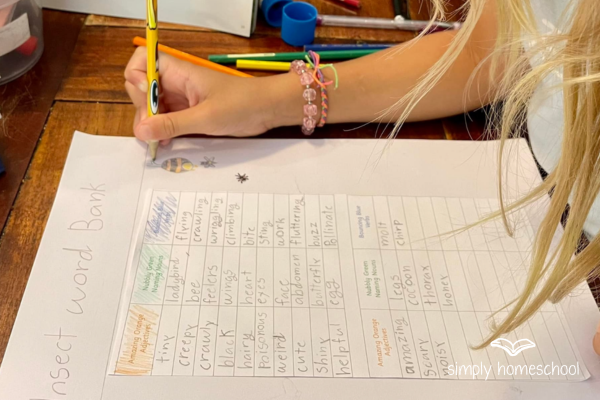
What your day could look like
- Lay out beautiful, inviting books on the table for browsing during breakfast
- Everyone helps clean up, gets ready and completes morning chores
- Read together from a book basket. Discuss big ideas, ask ‘I wonder’ questions, think critically
- Work together on some Core work
- Make morning tea together
- Independent learning (reading, Maths Online, writing, projects etc.)
- Lunch
- Unstructured time to pursue passion projects
- Come together for afternoon tea and a card game
- Sports, co-ops, music, and community activities

At this age, you can start to balance group/family learning with growing independence.
In our Core Program library, we have lots of programs for the middle years, including: 100 Things to Know about Space, A is for Australia, Australians All, Charlotte’s Web, Excellent Engineering, and Make Science Fun.
We also offer a 50% discount for Maths Online. We highly recommend this excellent maths program.
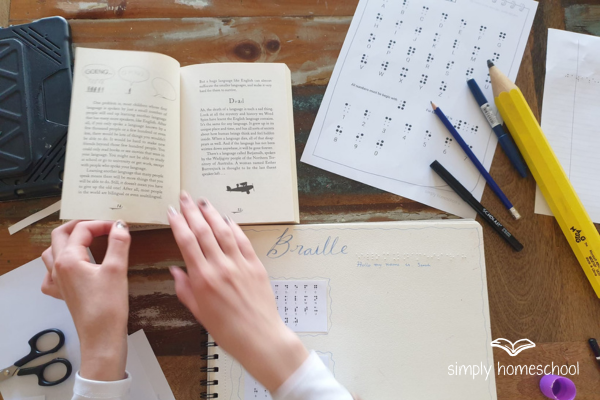
Homeschooling teenagers
Homeschooling teens can feel especially daunting: Can I even teach high school?
YES! Yes, you can!!
The great thing about homeschooling teenagers is that, for the most part, they can already do all the things they need to learn: they can read, write, type, listen to and understand information, form opinions, use the internet to research, learn from YouTube videos, organise their time, work independently, and so much more!
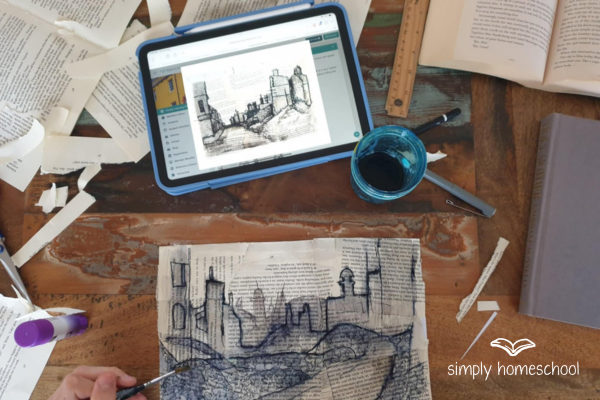
Homeschooling a teenager is less about being a teacher and more about being a mentor, which takes a huge amount of pressure off you and also models lifelong learning to your teen. Why are Israel and Palestine at war? Let’s look that up! What are Newton’s Laws, and why are they relevant? Great question. Let’s find out and test them.
Go down the rabbit hole with your teen! In doing so, you’re showing them that we never stop learning, that it’s not only ok to want to know things, but that it’s fun and interesting.
When your teen first leaves school, they may also need time to heal. Some teens carry school-based stress or disengagement. They may at first appear uninterested in learning or, at times, outright refuse to apply themselves to anything that looks remotely like schoolwork. Remember, you are the mentor. Don’t push too hard.
They may also find that having the freedom to make more of their own choices is overwhelming at first. What time to get up, what time to eat, when to study, what to study - these are choices that were made for them up until this point. It’s going to take some time for them (and you) to adjust to this new way of living and learning.
Give them time to remember what they love, what interests them and who they are outside of school.
This might take a while.
Try not to panic. We can all doom-spiral into a ‘we’re running out of time’ anxiety. But this isn’t helpful for our teens or ourselves. Try to be in the present and move forward from there. Remember, a Year 12 certificate and an ATAR are not the only way forward for our teens. We are living in a rapidly changing world. The predictable pathway to ‘success’ that we were taught no longer exists.
Talk with them – not as their new teacher, but as their parent who always has their back! Dream big together. Set lofty goals. Research career paths and find out which skills employers are looking for. Then work backwards and ask: What would I need to learn to move toward that? What skills do I need to develop? What experience would help me better understand the job?
It’s also worth taking some time to research alternative pathways to university and TAFE. This can be something fun to do together – to sit and dream about what could be.
Try not to judge their dreams or place a higher value on one career over another. Besides, they may change their minds in the future – we all do, and that’s ok. What matters is that they are rediscovering an excitement towards learning.
Lastly, community is hugely important at this age. Socialising, volunteering, part-time work, book clubs, sports clubs, gaming, sleepovers, pizza parties. Being connected to community is essential for your teens' social and emotional development.
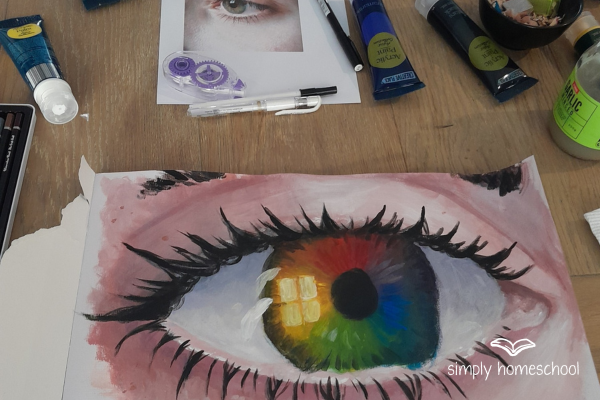
What your day could look like
- Have interesting and thought-provoking books on the table to read over breakfast
- Morning chores
- Check their planner and daily goals
- Independent Core work
- Morning tea chats – share something interesting they’ve seen, heard or read recently
- Passion projects with goal-setting and reflection
- Lunch with card games or relaxed conversation
- Afternoon part-time work, sport, co-op classes, social catch-ups etc.
At this age, you and your teen are moving towards greater independence in their learning, as well as increased responsibility in your family and their community.
For our teens, our Core Program library includes engaging programs like Introduction to Shakespeare, Slam Your Poetry, Financially Literate Youth, The Book Thief, Super Simple Physics, and Food Tech.
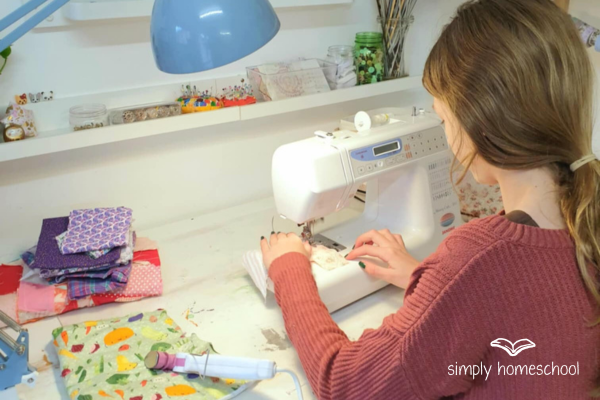
In the end
Homeschooling is not about recreating school at home. It is about relationships. It’s about retaining or rediscovering what makes us unique. What lights us up, what connects us, what comforts us.
It is about creating an environment where learning feels natural, connected and alive. Where learning isn’t separated from real life, because learning is life.
There will be days that feel magical.
There will be days that feel messy.
Both are part of homeschooling.
We all know that perfection isn’t attainable or healthy. Perfection can come from a deep love for our children and a yearning to give them the best childhood, the best education and the best start in life. But striving for perfection places enormous amounts of pressure on ourselves and our children.
If we can let go of perfection, both within ourselves and towards our children, we can begin to relax into homeschooling, knowing that there’ll be good days and not so good days. And that’s ok.
You do not have to have it all figured out today. You just have to begin – gently, imperfectly, together.
And remember: You can do this! Even on the wobbly days.