What Is Deschooling? And Does Your Family Need It?
You’ve made the decision to homeschool.
You’ve withdrawn your child from school, bought some stationery, cleared a space at the kitchen table and perhaps spent hours researching curriculum.
Monday morning arrives.
Right. Maths at 9. English at 10. Morning tea at 11.
Except… your child doesn’t want to sit at the table.
They’re exhausted. You’re worried they’re falling behind. Suddenly you’re wondering whether you’ve made a terrible mistake.
Welcome to one of the biggest adjustments of beginning homeschooling: discovering that homeschool doesn’t have to look like school at home.
And that’s where deschooling comes in.
What is deschooling?
Deschooling is a period of adjustment between school and homeschooling.
It gives children - and their parents - time to step away from the routines, expectations and ideas about learning that often come with traditional schooling, and discover what learning might look like in their new environment.
After years of bells, timetables, classrooms, assignments and someone else deciding what happens next, suddenly having freedom can feel surprisingly strange.
Your child may need time to rediscover what they enjoy, and you may need time to discover how they learn. Both of you may need time to work out what you want your homeschool to actually feel like.
Deschooling creates space for that to happen.
But aren't they supposed to be learning?
They are probably learning already.
One of the most surprising things about homeschooling is discovering just how much learning happens when nobody has labelled it a lesson.
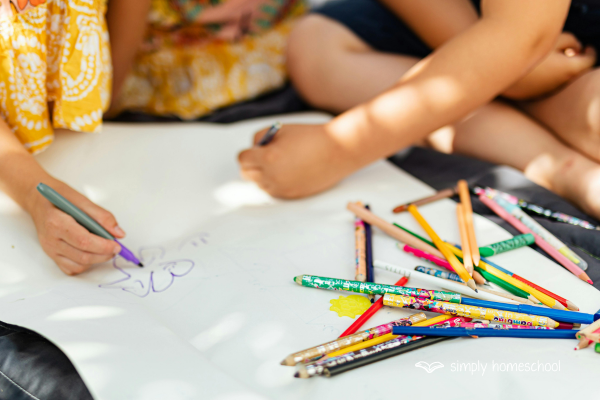
Your child might spend an afternoon baking and use fractions, measurement and chemistry without opening a maths or science workbook. They might become fascinated by an insect in the backyard and spend an hour researching what it is. They might read an entire series of books, build an elaborate Minecraft world, make a stop-motion movie, learn a new skateboard trick, draw for hours, help repair something around the house or ask a question at dinner that sends the whole family down a fascinating rabbit hole.
None of this looks particularly like school, but learning is everywhere.
Deschooling gives you an opportunity to start noticing it.

Deschooling isn't the same as doing nothing
This is an important distinction. Deschooling doesn't mean abandoning your child to unlimited screens for three months while everyone waits for something educational to happen.
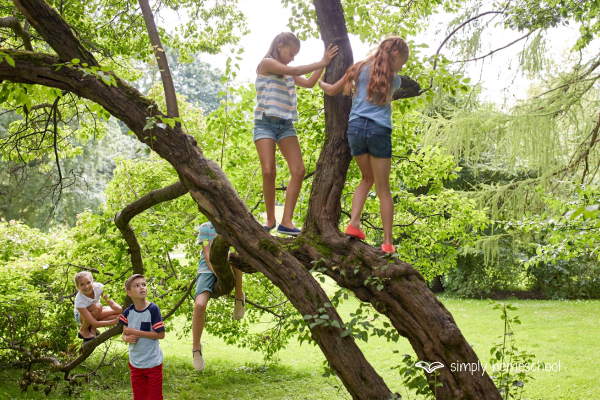
It can be wonderfully full. You might visit the library, go bushwalking or cook together. Maybe you play board games, go swimming or snuggle up and read aloud on the couch.
Visit museums. Plant something. Build something. Watch documentaries. Spend an afternoon at the beach. Follow an interesting question. Let your child get bored enough to invent something to do.
Most importantly, spend time together.
You are beginning a completely different rhythm of family life, and you don't have to know exactly what that rhythm will look like on day one.
Your child might need to decompress
For some children, the transition out of school is relatively straightforward, but for others, it isn't.
A child who has been stressed, overwhelmed, or unhappy at school may need more than a long weekend to be ready to enthusiastically embrace learning again.
They might sleep more, or want to do very little. They might resist anything that looks remotely educational or suddenly become emotional or clingy. They might spend weeks absorbed in one favourite activity.
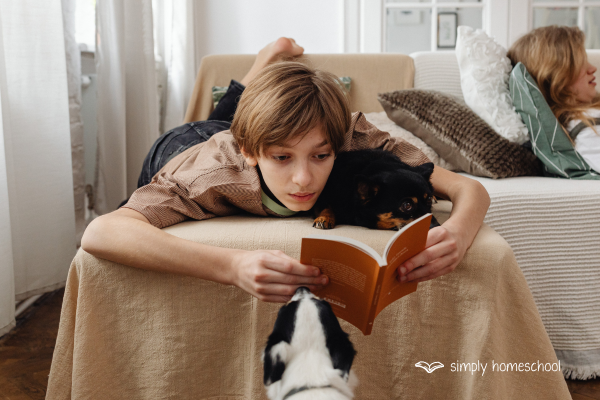
Rather than immediately asking, “How do I get them learning again?”, it can help to become curious about what you're seeing.
What happens when the pressure disappears? What does your child choose when nobody is directing them? What sparks their curiosity? What frustrates them? When during the day are they most engaged? What do they want to know more about?
You're gathering incredibly useful information about the person you're about to homeschool.
Parents need to deschool too
This might actually be the harder part, because most of us spent years at school ourselves.
Without realising it, we can carry a very specific picture of what education is supposed to look like.
Learning happens between certain hours.
Children of the same age should learn the same things.
Maths happens in a maths book.
Writing means sitting down and writing a paragraph.
If a child is having fun, perhaps the work isn't challenging enough.
If we aren't constantly teaching, perhaps we're not doing enough.
Those ideas can be difficult to shake.
Then you start homeschooling and discover your child learned more geography from planning a hypothetical trip around Australia than they did from completing a worksheet.
Or that the reluctant writer will happily spend forty minutes creating elaborate signs for a pretend shop.
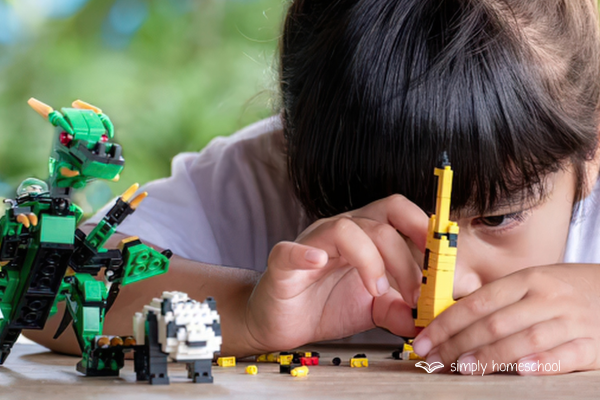
Or that a question about why the moon is visible during the day somehow becomes an afternoon of astronomy.
Deschooling isn't only about changing your child's relationship with learning. It's also about changing the way you recognise learning when you see it.
How long should you deschool?
There isn't a magic number.
You might hear rules such as “one month for every year your child attended school”. They're useful as reminders that adjustment can take time, but they aren't deadlines you need to follow.
Some children are ready for more structure quickly, and others need much longer. Deschooling doesn't necessarily have a clear finishing line.
Instead, you might gradually introduce more rhythm into your days. That could be a regular library morning, a read-aloud after breakfast, or a Core Program you're both excited about. Some maths a few mornings each week. A project inspired by something your child has become fascinated by.
You can build your homeschool slowly, paying attention to what works rather than trying to recreate the timetable your child just left.
What if I'm worried about falling behind?
This fear is incredibly common. When you step outside the school system, it can feel as though an invisible class is continuing without you.
What are the other Year 4 kids doing? Should we be doing fractions yet? What if everyone else gets ahead?
But homeschooling gives you something extraordinarily valuable: the ability to meet the child who is actually in front of you.
If your child needs extra time with multiplication, you can give them extra time. If they're fascinated by Ancient Egypt, you don't have to stop because the timetable says history is over. If they're racing through novels but find handwriting exhausting, those two skills don't have to progress at exactly the same pace.
Education isn't a race in which every child must pass the same checkpoint on Tuesday morning.
You have time.
Start with connection and curiosity
If you're beginning homeschooling, you don't need to create the perfect homeschool immediately.
You don't need the perfect timetable, or shelves filled with curriculum.
You certainly don't need to recreate a classroom in your dining room.
Start by getting to know your child as a learner. Read together, talk, explore, make things and go places.
Notice what makes their eyes light up. Notice what makes learning shut down.
Let yourselves experiment.
Some days will work beautifully. Some ideas will flop spectacularly. That's okay. You're learning too.
Over time, the question begins to change.
Instead of asking: “How do I make homeschool look like school?” you can start asking: “What does learning look like for our family?”
And that might be the most important lesson deschooling gives us.