
You are allowed to skip the lesson

You are allowed to skip the lesson.
There, we said it. You can skip an activity, a lesson, or even an entire program.
You can shorten it, change it, replace it or decide it simply isn’t right for your child today. You can spend three days exploring one activity and three minutes on the next. You can skip ahead, come back to it later or move on completely.
Curriculum resources are there to support your homeschool. Your homeschool is not there to serve a program.

We know that sometimes, letting go of a lesson can feel surprisingly difficult.
Many of us grew up believing that learning happens in a particular order. The teacher delivers the lesson, the student completes the work, and every box must be ticked before anyone can move on.
So, when we begin homeschooling, it can feel natural to approach a program in the same way. Lesson one must be completed before lesson two, and every activity must be finished. If something has been skipped, surely something important has been missed?
Homeschooling, however, gives us the freedom to think differently, and a program is a guide, not a set of rules. A thoughtfully created homeschool program gives you ideas, direction and support. It introduces concepts, provides learning experiences and helps you see where your child might go next.
But it cannot know your child as well as you do.
It doesn’t know that your child has already spent six months reading everything they can find about volcanoes. It doesn’t know that handwriting is exhausting for them today, or that the suggested craft is going to cause more frustration than joy. It doesn’t know that a question in this morning’s lesson has sparked an extraordinary conversation that you don’t want to interrupt.
A program also doesn’t know that the baby was awake all night, that you have an appointment in an hour, or that everyone in the house desperately needs a quiet day.
That’s where you come in, because you are the best teacher for your child.
You are not simply delivering a program. You know the child in front of you, and you are the right person to notice, respond and make decisions that work for them. That isn’t failing to follow the program - that is homeschooling.
One of the biggest worries parents share with us is that skipping a lesson will leave a gap in their child’s education. But completing an activity is not the same as learning, and skipping an activity is not the same as missing a concept.
Your child may already understand what the lesson is teaching, and they might demonstrate their understanding through conversation, play or a real-life experience. The activity may cover something you know you will revisit naturally in another subject or at another time.
Learning is rarely as neat and linear as it might appear in a curriculum.
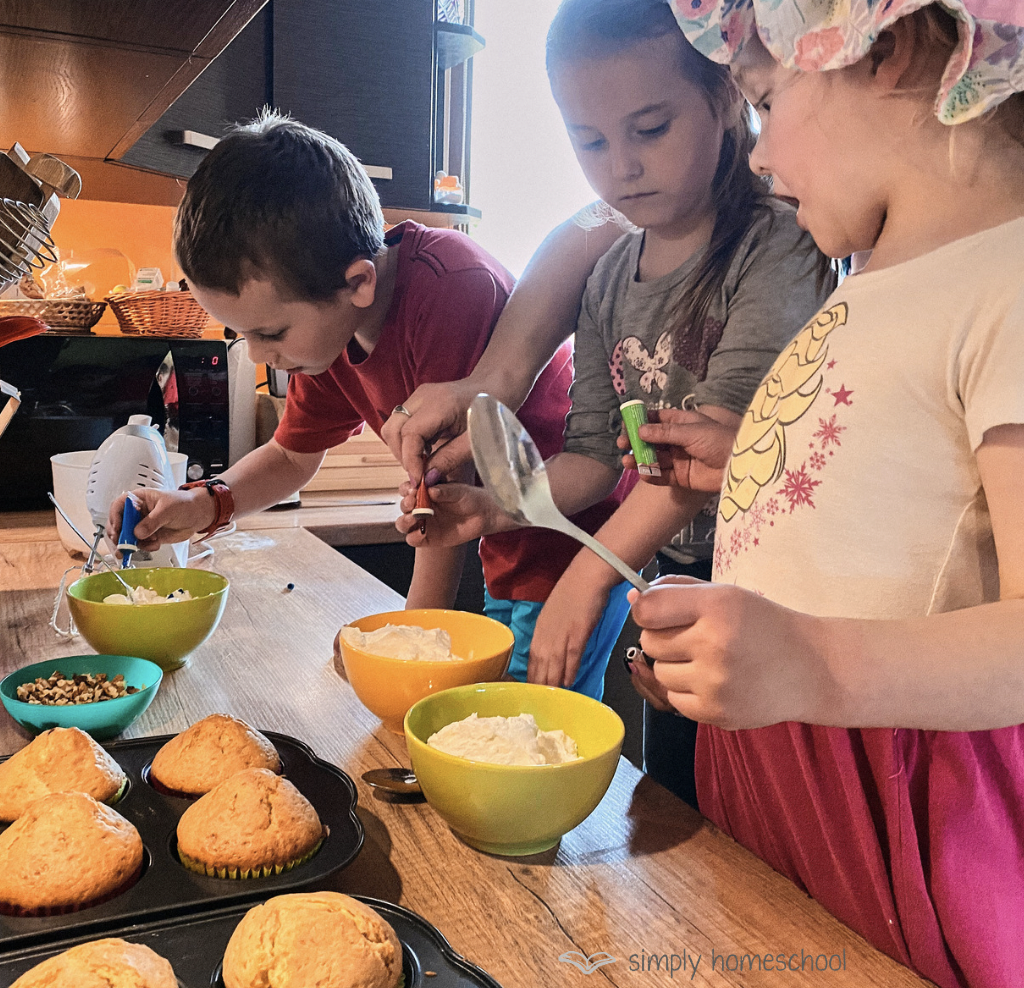
Children come across important ideas again and again. They explore fractions while baking, measuring, sharing food and working with money. They develop vocabulary through books, conversations, films, games and everyday life. They learn about science in the garden, history through stories and geography while planning a trip.
One skipped activity is not going to undo a rich and varied education.

There are many good reasons to change a lesson. Sometimes your child understands the concept after answering the first two questions. At other times, they are fascinated by one small part of a lesson and want to explore it more deeply. Allowing them to follow their natural curiosity might mean setting the planned activities aside for the day.
Sometimes the lesson you have started simply doesn’t suit your child’s age, interests, abilities or learning needs. You might discuss the idea together, find a video, build a model or simply acknowledge that this particular activity isn’t for them.
Sometimes your child is tired, overwhelmed or struggling. Shortening the lesson protects their confidence and allows you to return to the concept when they are more able to engage with it.
And sometimes, it might just be that life happens. Appointments, work, younger siblings, illness, visitors, difficult nights and beautiful unexpected opportunities are all part of family life. Your homeschool is allowed to exist within that life, rather than in competition with it.
If you’re unsure whether to skip or adapt something, look beneath the activity and ask: What is the purpose of this lesson?
Is your child learning a new concept? Practising a skill? Demonstrating understanding? Exploring an idea? Building confidence?
Once you understand the purpose, you can decide whether your child needs the activity exactly as it is written.
If they have already demonstrated the skill, you may decide to move on. If they need more support, you might simplify the activity or complete it together. If the format doesn’t suit them, you can find another way to explore the same idea.
A written response might become a conversation. A craft might become a drawing. Ten maths questions might become three. A research project might become a documentary, library visit or enthusiastic discussion over lunch. Adaptation does not make the learning less valid.

A completed checklist can be reassuring. It gives us something concrete to point to at the end of the week and say, “Look – we did it.” But it can’t always show us what mattered most.
You know the feeling when your child finally understands something that had previously felt impossible? Or when they spend an hour deep diving into a topic or question that popped up?
Progress is happening even when there isn't a neat page of work to show for it.

Sometimes parents feel comfortable skipping a lesson only if they have an educational replacement ready, and it might be reassuring to remember that not every skipped activity needs to be replaced. You don’t need to turn it into a bigger project, find a documentary or print a worksheet. Sometimes you can simply decide that your child has done enough for today.
That decision may protect their enthusiasm for tomorrow. It may make space for rest, play, movement or connection. It may prevent a minor struggle from becoming a battle that follows everyone through the rest of the day.
Flexibility is not something you use only when homeschooling has gone wrong. It is one of the great strengths of homeschooling.
Some weeks, you might follow the program almost exactly. Other weeks, you might take one idea and head in an entirely unexpected direction. Both can be wonderful ways to learn.
So, cross things out. Write notes in the margins. Stay with the lesson your child loves. Change the one that isn’t working. Skip the activity that everyone is dreading.
You are not falling behind. You are making thoughtful decisions for a real child, in a real family, living a real life.